
Philological Workbench for Alphasyllabic Scripts
Glycerine Aksara enables scholars to create richly annotated editions that connect transliteration, lexical analysis and translation to the original manuscript image.
Its Viewer allows readers to explore and compare editions, moving directly between scholarly interpretation and the underlying evidence.
Built on IIIF and Web Annotation standards, Glycerine Aksara publishes editions as interoperable, reusable research objects for the digital humanities.
Built for scholars. Intuitive workflows to annotate, collaborate and publish.
The Glycerine Aksara scholarly workflow
One continuous workflow
From the first annotation to a fully published, publicly accessible text, Glycerine Aksara allows for continual iteration through each process.
1. Upload Manuscript

Upload an image of your manuscript for IIIF hosting and AI ink recognition.
2. Add Annotations

Identify akṣaras and use AI annotation tools to outline each character.
3. Analyse Akṣara

Record individual graphemes and text critical markup.
4. Analyse Text

Aggregate akṣaras into words, identify with lemma, and inflect.
5. Sequence Editions

Impose textual sequences and semantic tags.
6. Publish

Generate interoperable IIIF manifests for viewing of collections of editions.
Editor
Create accurate transcriptions and editions
Glycerine Aksara Editor is a scholarly workbench for creating richly annotated editions of manuscripts and inscriptions. Scholars identify and transcribe individual akṣaras, construct words and textual sequences, and record lexical, grammatical and translational interpretations. Every stage of the editorial process remains linked to the original manuscript image, producing structured scholarly editions ready for publication.

Viewer
Explore text and manuscripts with precision
Glycerine Aksara Viewer presents published scholarly editions alongside their source images in a synchronised, interactive environment. Readers can move between manuscript images, transcriptions, translations and lexical analysis, examine the evidence underlying individual readings, and explore alternative editions and palaeographic detail. Built on IIIF, the Viewer supports critical examination, comparison and wider access to scholarly research.
Read at the level of the aksara
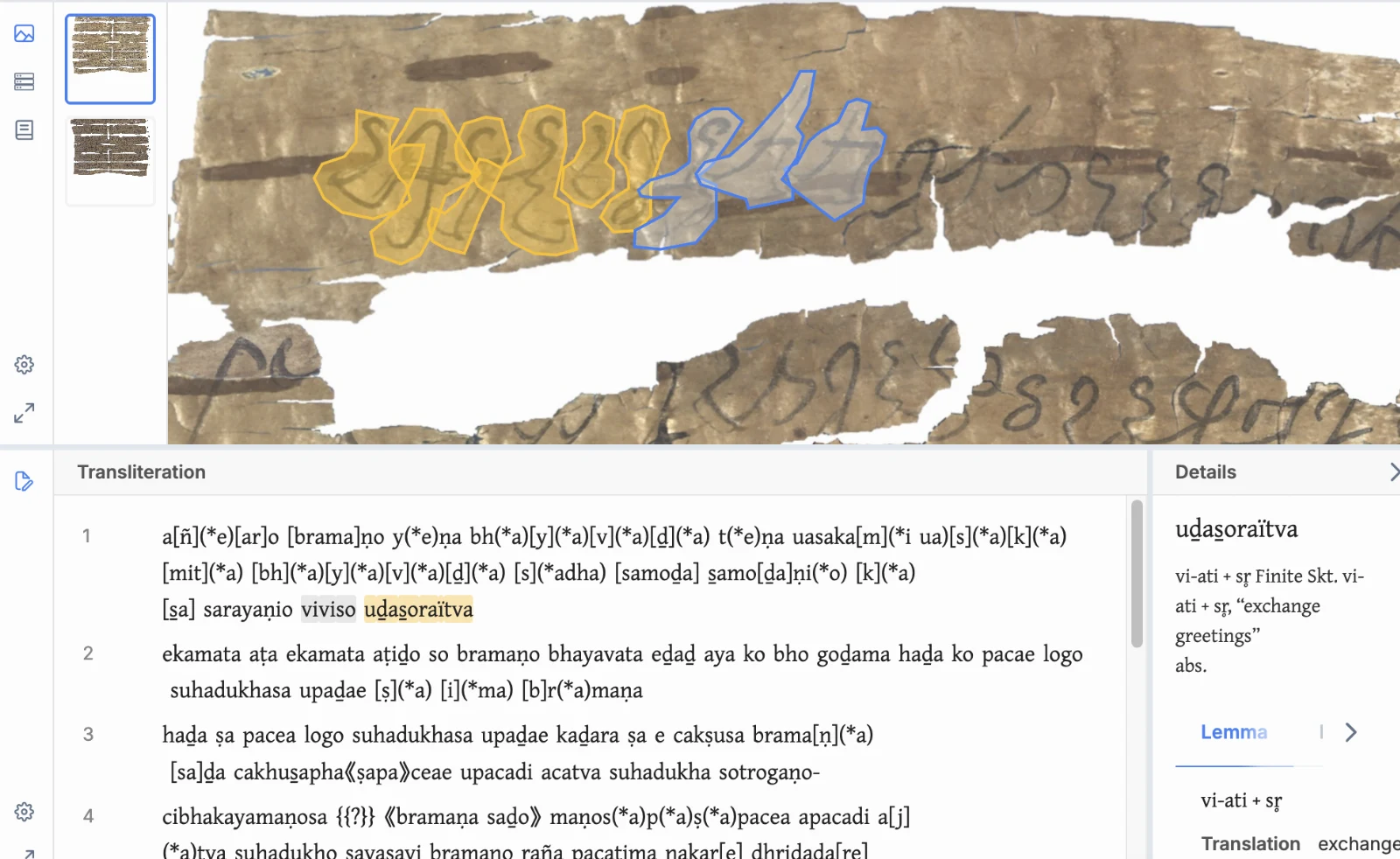
Explore high-resolution manuscript images and examine individual akṣaras in their original context, with editorial readings linked directly to the underlying manuscript evidence.
Deep Zoom
Examine fine details of letterforms and the writing surface through high-resolution, zoomable manuscript images.
Analyse Individual Akṣaras
Study individual akṣaras in situ, preserving their relationship to surrounding characters and the original writing surface.
Link Readings
Navigate directly from the edited text to the corresponding region of the manuscript image, allowing individual readings to be examined against the source.
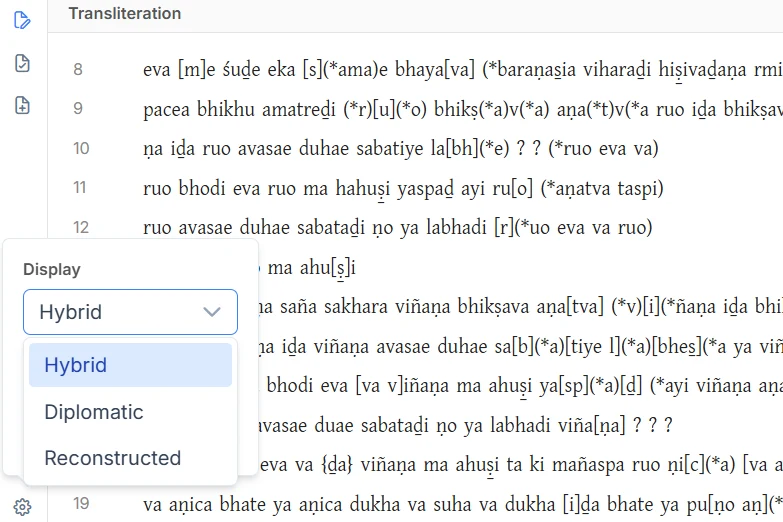
Compare readings
Explore different representations of the same scholarly edition, from the surviving manuscript text to its editorial reconstruction. Switch between views to examine the relationship between the original reading and its scholarly interpretation.
Trace words and lemmas
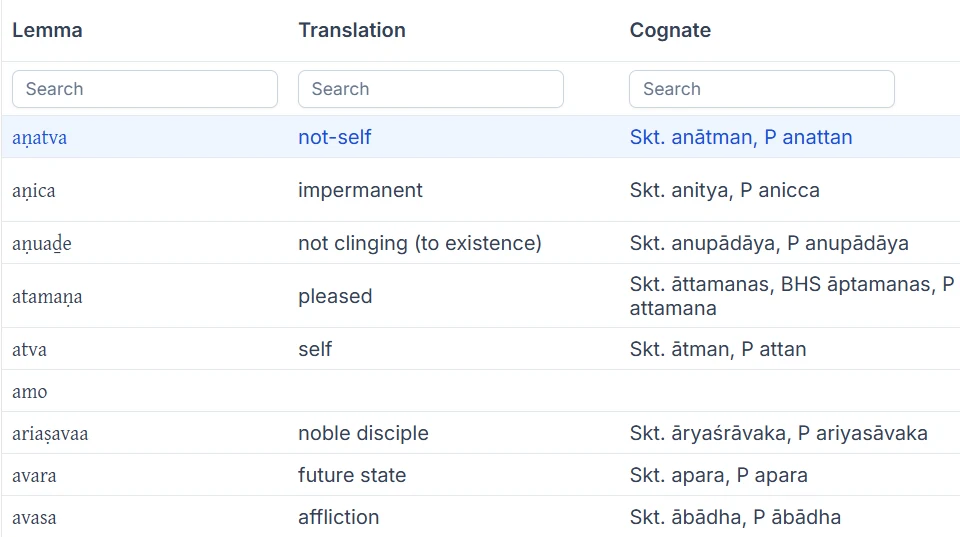
Explore the vocabulary of a scholarly edition through a searchable glossary, connecting lemmas, translations, grammatical information and cognates to attestations in the text.
Browse Glossary
Search and examine lexical entries, including meanings, grammatical information and cognate forms, within the edition’s structured glossary.
Trace Attestations
Follow individual words and lemmas through their occurrences in the edited text, with readings linked to the corresponding manuscript evidence.
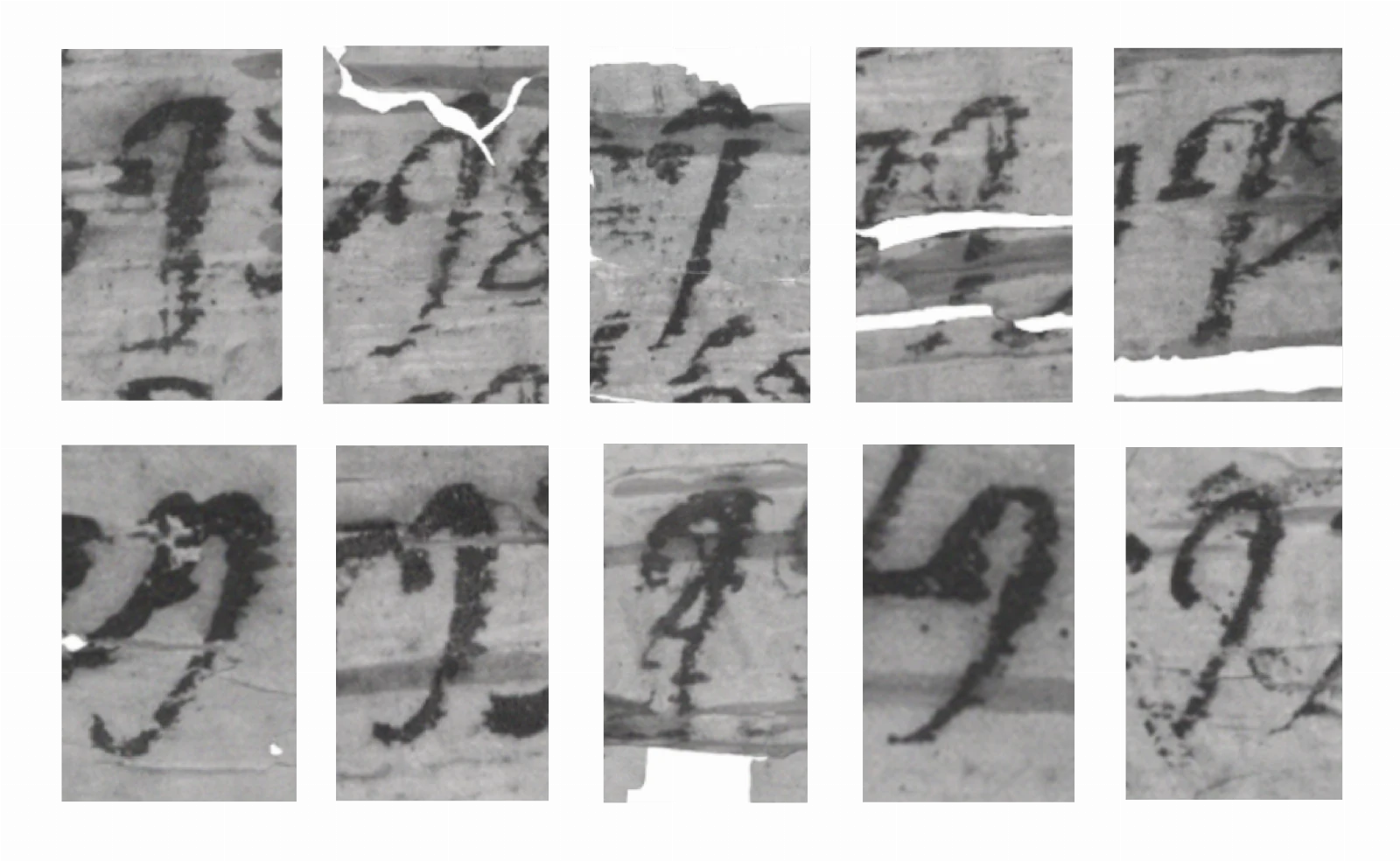
Investigate palaeographic forms
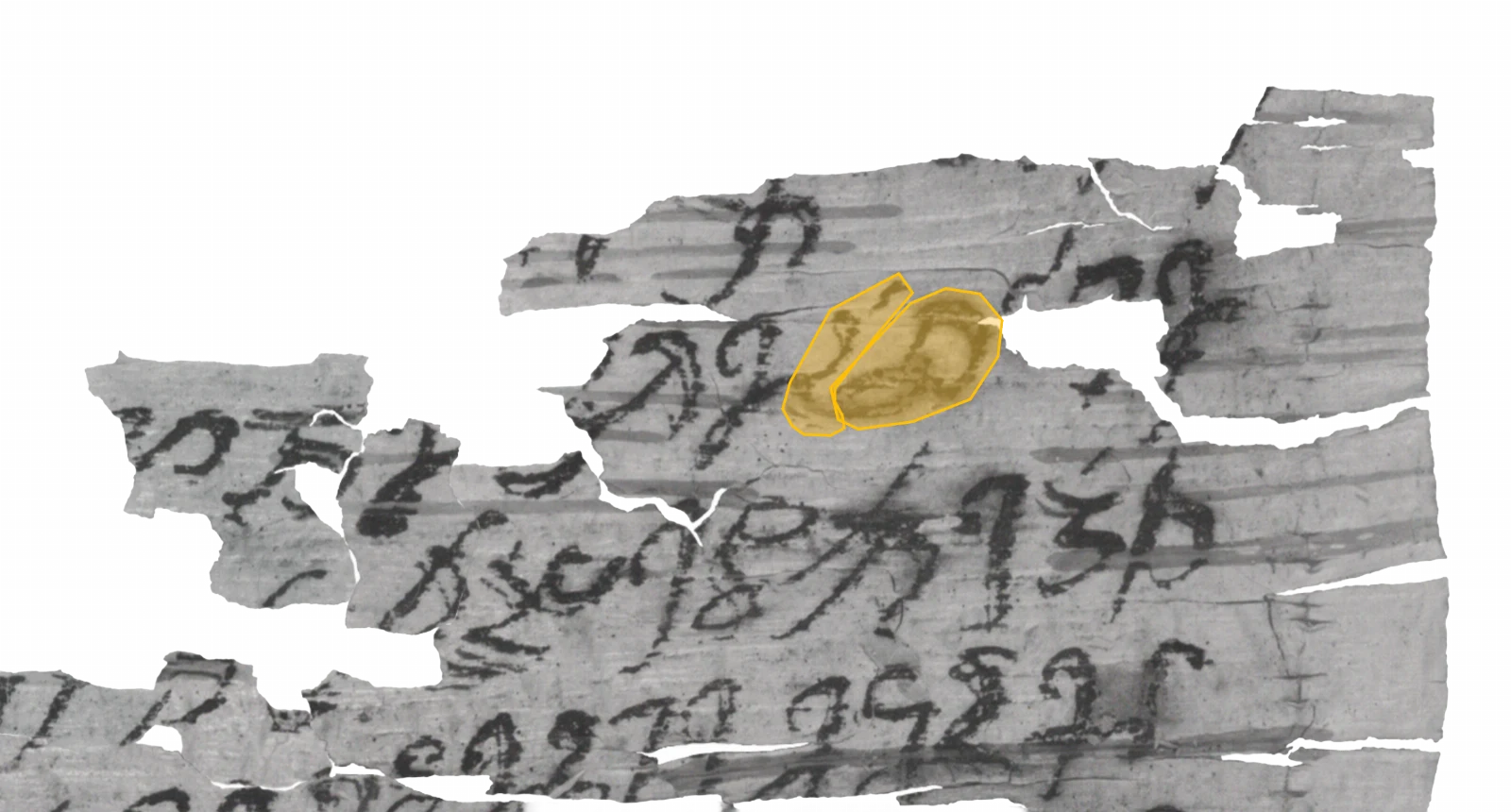
Examine occurrences of individual akṣaras across a manuscript, bringing together their visual forms for detailed palaeographic comparison and analysis of scribal practices.
Compare forms
View multiple occurrences of the same akṣara side by side, identifying shared characteristics and distinctive features.
Examine Variation
Investigate differences in letter shape, proportion and execution, revealing patterns of palaeographic variation and scribal practice.
Case Studies
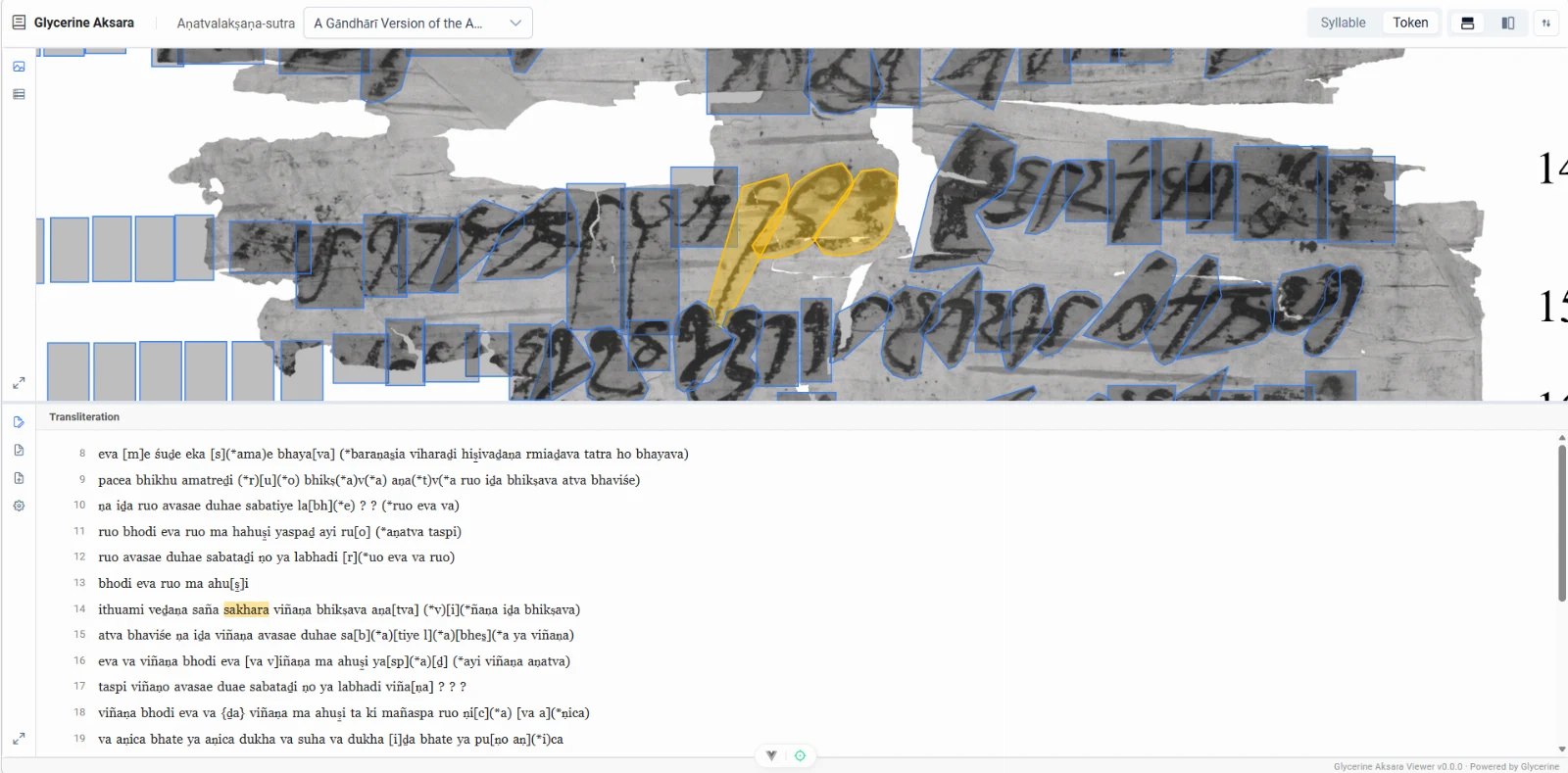
Gandharan Manuscripts
University of Sydney
The Buddhist manuscripts of ancient Gandhāra (1st century BCE–3rd century CE), written in Gāndhārī language and Kharoṣṭhī script, are among the earliest surviving witnesses to Buddhist thought.
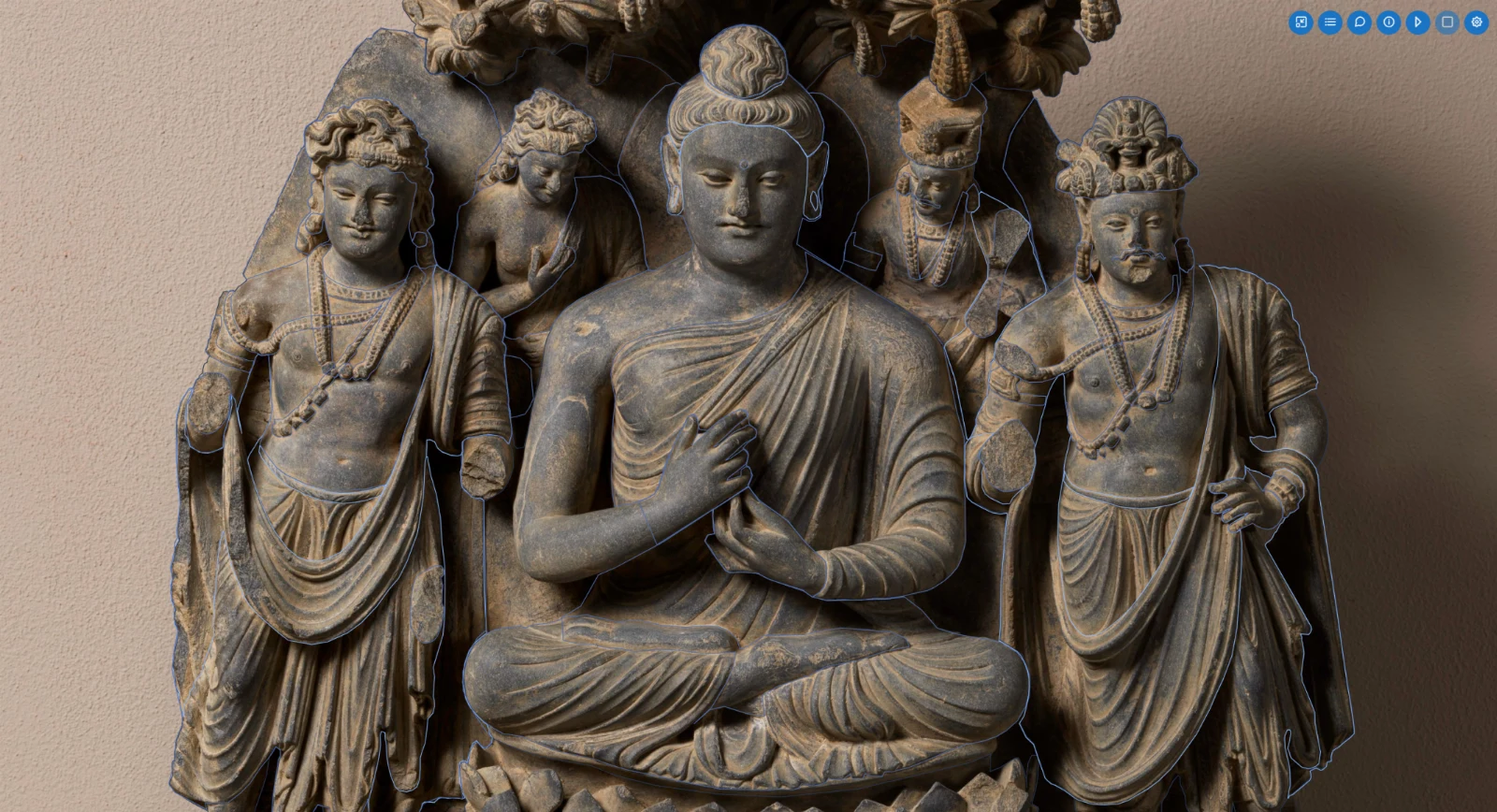
Buddhas and Bodhisattvas
Art Gallery of NSW, Chau Chak Wing Museum, National Gallery of Australia, Peshawar University, Power Institute, The Met.
Gandhāran Buddha and Bodhisattva statues are among the earliest anthropomorphic images of the Buddha; this project undertakes an art-historical analysis of their iconography to clarify the doctrinal and ritual meanings embedded in these forms.

Scholar-led
Designed around the philological practices, Glycerine Aksara places scholarly judgement at the centre of transliteration, analysis and interpretation, preserving the relationship between editorial decisions and manuscript evidence.

Open and Interoperable
Built on IIIF and open annotation standards, Glycerine Aksara transforms scholarly editions into structured, interoperable research objects that can be published, shared, preserved and reused beyond the platform.

Collaborative
Support scholarly collaboration between researchers across projects and institutions. Structured editions and attributable annotations make research transparent and traceable, enabling scholars to share and build upon one another’s work.
Our Partners